
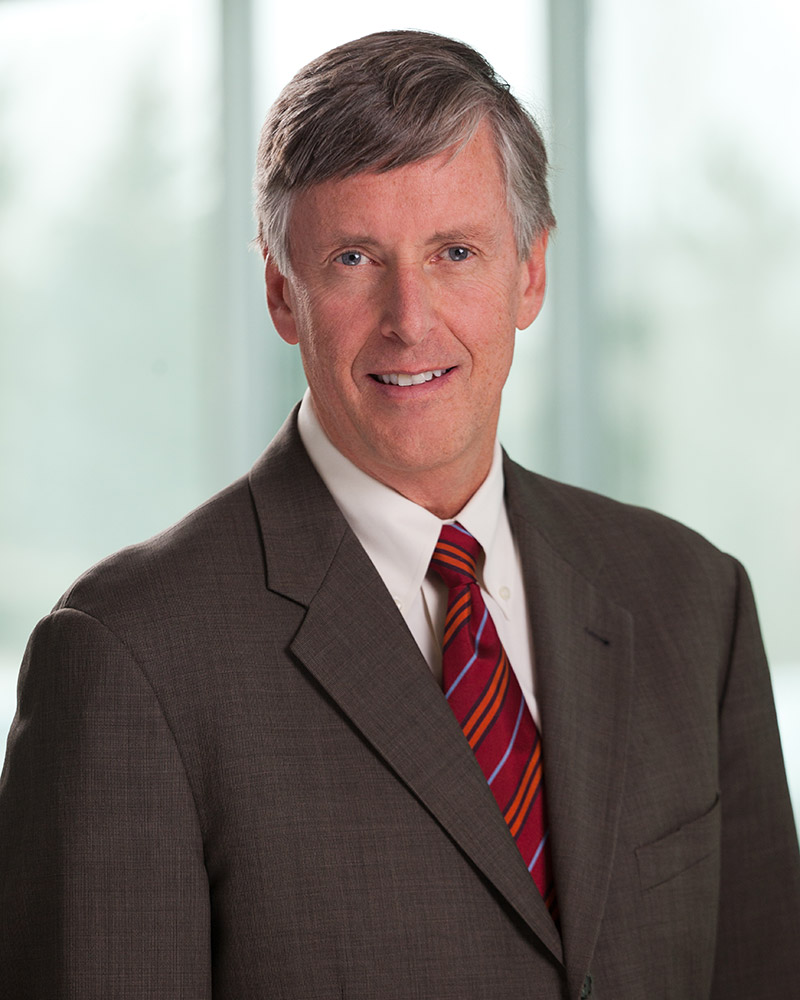
Alan Krause discusses the MWH commitment to water infrastructure in the Middle East in a special report. “Water Sector Has Huge Potential” was originally published in MEED on April 14, 2015 and was written by Andrew Roscoe.
Alan Krause, CEO of US water services company MWH, says the Middle East and North Africa region is a fertile place for growth. He discusses upcoming opportunities in the industry with MEED.
US-based MWH is planning for the Middle East and North Africa (Mena) region to form an increasingly large part of its global strategy in the coming years, with the region set to offer numerous opportunities for growth across the water sector.
MWH is not new to the Mena region, having entered the market in 1947 and designed Dubai’s first sewage treatment plant in the 1970s. However, the privately held water engineering firm, which currently has about 8,000 staff in 180 offices over 35 countries, is seeking to further increase its presence in the region.
“The Middle East is an important part of our strategy and a very important part of our growth plans,” says Alan Krause, CEO and chairman of MWH. “We have 250 people in the region at the moment, and I think we are planning to increase this to 1,000 in the coming years. The market is here, the needs are here, and clients are sophisticated and want to move ahead and execute major projects. So we want to invest more than we have done.”
Water focus
In an interview with MEED, Krause explains that his company remains committed to maintaining its focus on water. “While a lot of other major [infrastructure engineering] firms are becoming increasingly diversified into other areas, such as transportation and vertical construction for example, we have remained committed to water,” says Krause. “It is such an important commodity, and such a huge market, that we can continue to grow. We believe that gives us a competitive advantage.”
Krause says the group will target large-scale masterplanning and water management strategy programmes in the Middle East. “Out of the full spectrum of what you can do in water, we want to be involved in masterplanning, asset creation, hydraulic modelling this is the higher-value decision-making that clients make in terms of how they develop and manage water assets,” says Krause.
“We can also do basic design, but competition is stiff and local firms can do it well and effectively. What we can bring is high-value expertise, experience and ideas to the client. That’s what we are doing in Abu Dhabi, Dubai and Qatar.”
In 2012, MWH was appointed by Qatar’s Public Works Authority (Ashghal) as management contractor for the five-year Qatar Drainage Asset Management Programme to support the operation and maintenance of all the country’s planned wastewater facilities and drainage networks being undertaken as part of the 2022 World Cup infrastructure programme.
Increasing presence
The firm has also provided numerous management and consultancy services for Abu Dhabi Sewerage Services Company and, in May 2014, was appointed to work on the emirate’s new wastewater masterplan. While the UAE and Qatar have provided fertile ground for MWH in recent years, Krause says the group is looking to increase its presence in the GCC and throughout the Mena region in the coming years.
“We have worked in Saudi Arabia, but that is an area we want to see grow,” he says. “We have ongoing projects in Jordan and Lebanon, and we’ve worked in Libya in North Africa in the past. That is a place we’d like to go back to, provided it’s a safe place for us to work.”
A growing part of masterplanning in the region’s water sector involves treated sewage effluent (TSE) systems and wastewater reuse, and Krause highlights this as an important trend for the future.
“There is a big connection in the Middle East between energy and water desalination requires huge energy consumption,” he says. “Most of the energy from oil and gas conventional and unconventional requires water in the process to get the energy out, or there is a byproduct of water from energy exploration. Our [Middle East] clients are looking for programmes that cover the whole watercycle. It is not just about retreating water, it’s how you move it around and how you reuse it.”
Food security
In addition, Krause identifies food security as the one of the key challenges facing the water industry in the coming years. “The requirement of water for food security will become really important for developing countries,” says Krause. “It will not just mean getting water for use in agriculture in a dry environment, it may also mean you will be investing in using agriculture to develop crops somewhere else for your country. Food security is still an early issue, but it will become a big market for the water sector.”
Krause says improving the efficiency of existing assets will be a key theme for the water sector in 2015, particularly with the drop in oil prices. “There is a move away from spending money on new things to preserving existing assets, and getting more efficiency and value out of them,” he says. “As oil prices drop, the logical thing [utilities] will look at is less capital expenditure and more efficient operating expenditure.”


